Do You Still Need a Cover Letter? Here’s When to Use One (and When to Skip It)
One of the most common questions I’m asked is whether job seekers should submit a cover letter along with their resume. In most cases, my answer is not unless it’s required.
Cover letters have long been seen as a standard part of the job application process, but in today’s hiring landscape, they’re not always necessary.
The Problem With Today’s Cover Letters
Let’s be honest: Most candidates are using ChatGPT or other AI tools to write their letters. Recruiters and hiring managers are reading nearly identical versions of the same five-paragraph template over and over. At that point, the letter isn’t helping anyone stand out, it’s just more noise in an already overflowing inbox.
And speaking of overflowing inboxes…
Recruiters and hiring managers are busier than ever. Many simply don’t have the time to read through an extra document, especially one that adds no new value. In fact, most US companies no longer require them.
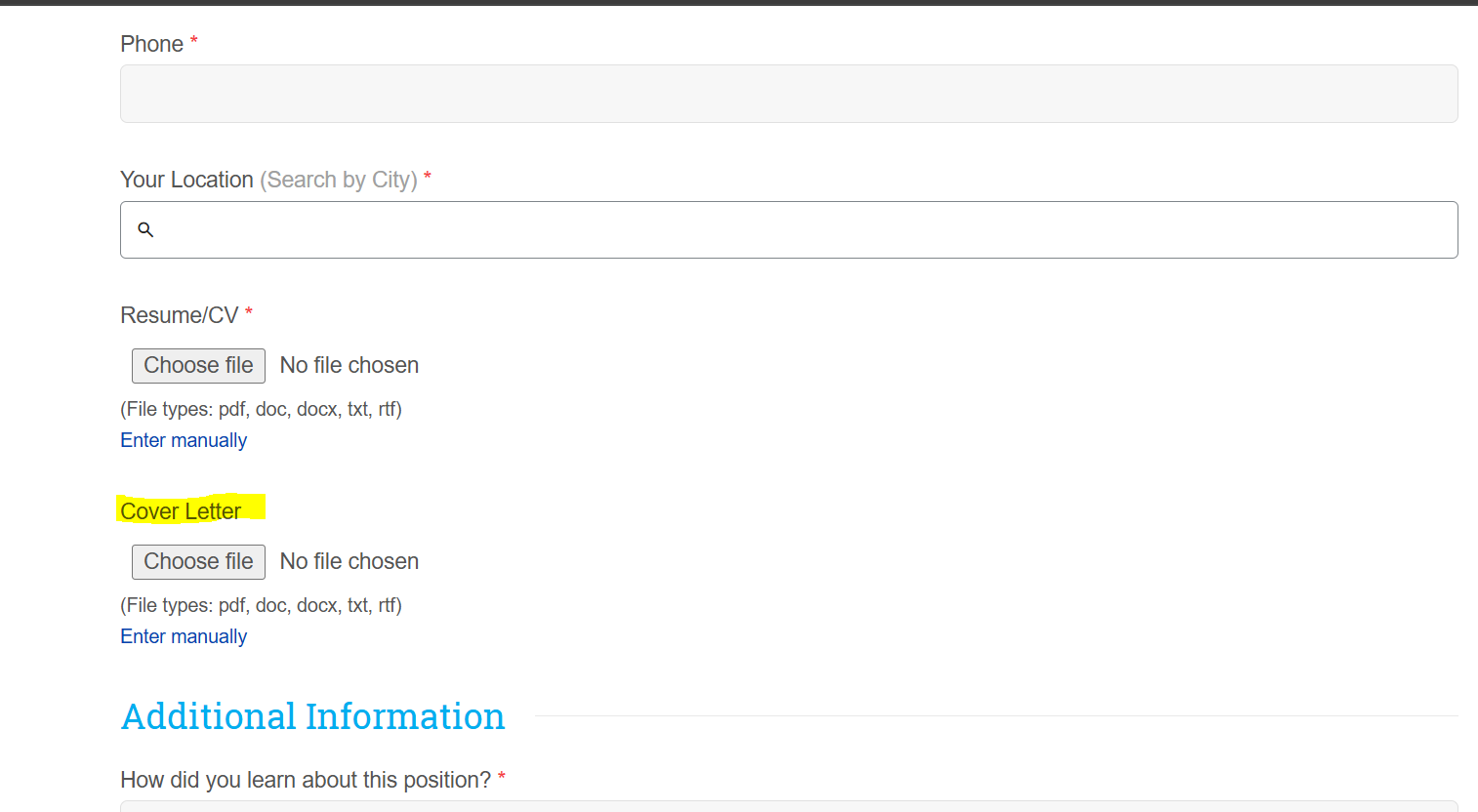
The image below is taken from an online application for a Software Engineer role based in the US. Though there is the option to upload a cover letter, note that is is not a required document. Other fields such as location, phone, and resume are required and have a red asterisk next to them to indicate this.
When a Cover Letter Is Worth Sending
Even though I rarely suggest them, there are specific situations where a cover letter can truly work in your favor:
1. Recent College Graduates
If you’re just entering the workforce, you may not yet have a long resume, but you do have motivation, passion, and context to share. A cover letter helps you connect the dots and differentiate yourself from other new grads.
2. Career Changers
If you’re making a major pivot, say, going from software engineering to physical therapy. Your resume alone may not explain the “why.” A cover letter gives you room to tell the story behind the switch, highlight transferable skills, and frame your transition in a compelling way.
3. Roles That Involve Writing
If writing is part of the job: marketing, communications, PR, content creator, journalism, etc. Your cover letter becomes a built-in writing sample. In these fields, skipping it can actually hurt you.
4. If You Can Write an Exceptional Cover Letter
We’re talking about a letter with a strong voice, fresh storytelling, and no AI fingerprints. Something that sparks curiosity or emotion. These letters can stand out, because they are now rare.
How Recruiters Spot AI-Written Cover Letters
Want to know one of the biggest giveaways? Overuse of long hyphens—like this—everywhere. AI loves them, and resumes/cover letters filled with them instantly raise red flags.
Bottom Line
A cover letter is useful when it adds context, clarity, or creativity that your resume can’t convey on its own. If it doesn’t accomplish that, most hiring teams won’t miss it. Use one intentionally to genuinely add value, not out of habit.
What about you, do you still send cover letters? And if you’re a recruiter or hiring manager, do you actually read them? I’d love to hear your experiences.